Regular movement is one of the best things you can do to keep your body strong as you get older. Once you turn 60, you begin to lose muscle and bone naturally, but regular activity helps you maintain your muscles. Moving also loosens your joints and helps keep your connective tissue from becoming stiff and fragile, which helps to avoid injury. Remaining active also supports circulation, heart health, and balance, all of which help you remain independent. Here at AgeWell, we remind our patients that strength isn’t about the weight you lift. It is about keeping the ability to do the things you love, like gardening or taking your dog for a walk around your neighborhood.
Estimated reading time: 6 minutes
What Daily Exercise Can Do for Your Body After Age 60
Daily exercise is one of the most effective ways to maintain strength, flexibility, and independence. Physical activity doesn’t always mean going to a gym. It can simply mean moving your body, stretching, gardening, performing daily chores, walking, or doing a few strength exercises. These activities can help you remain independent by improving your ability to perform your daily tasks.
AgeWell Medical Associates provides primary care for patients aged 60 and up throughout Colorado Springs. The providers at AgeWell emphasize that strength in aging patients doesn’t necessarily depend on the amount of weight lifted or the number of weight exercises performed. Strength, rather, is being able to get out of a chair, pick up items or groceries from the ground, walk the dog, work in the garden, and simply move around the house without getting tired, fatigued, or falling.
Why Exercise Is Important for the Healthy Aging Body
As you age, your muscle mass and bone density change. To keep working, muscles, bones, joints, and connective tissues require activity. Daily activities can help maintain your ability to circulate blood. Exercise also has cardiovascular benefits, as well as coordination and balance. Performing daily activities that are strenuous for your body can help you with everyday activities. If your legs are stronger, it may make it easier for you to climb stairs or stand up from a seated position.
If you are interested in hobbies, your improved mobility may help you participate more in those activities. Other benefits of physical activity may include better sleep, more energy, improved mood, and healthier blood sugar management. Studies have also found that, as you age, it’s better for your body if you include aerobic, muscle-strengthening, and balance activities in your routine.
Resource: hopkinsmedicine.org
It’s Not About Doing It a Lot at Once
The best type of exercise for those in their 60’s or older is regular moderate activity. Rather than doing a strenuous workout and pushing your body to fatigue, it’s better to spread the activity out over the course of a week to allow your body to adjust. Your body may not be accustomed to a lot of activity, especially if you haven’t exercised in a long time, and it may get sore or fatigued more easily with too much.
Walking for 20 minutes several days of the week may be a more realistic goal than one long 2-hour exercise session at the gym on the weekend. Those just starting out may not be able to sustain activity for a 20-minute session and may need to break their activity into 5-minute or 10-minute sessions. All of those minutes count!
The CDC recommends 150 minutes of moderate-intensity aerobic activity a week, along with two days of muscle-strengthening activities and activities that maintain balance. If your health prevents you from participating in the above activities, it’s recommended that you remain as active as you are able to.
Types of Activity Older Adults Should Incorporate
Aerobic Activities
These are activities that raise your heart rate and make you breathe harder. Some activities to include are walking, swimming, cycling, dancing, or gardening. You can break up these aerobic activities into multiple sessions throughout a week instead of doing one longer session. For example, if you want to work out for 20 minutes a day, walk for 10 minutes in the morning and 10 minutes in the evening. This can be an easier way to incorporate exercise, especially for people who are working on regaining stamina from previous periods of inactivity.
Strength Activities
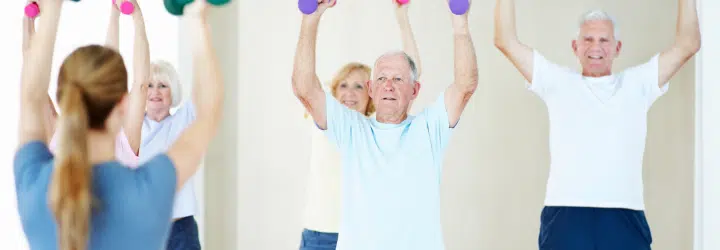
You can use hand weights, resistance bands, or other objects in your home or your body weight to do these types of exercises. Strength activities help your muscles to work against resistance. Some activities include standing up out of a chair, wall push-ups, heel raises, and seated leg extensions. Begin with light resistance, move slowly, and refrain from holding your breath. Consult your doctor for recommendations if you deal with joint pain, osteoporosis, balance issues, or any other mobility-related issues.
Balance and Flexibility
Working on balance can potentially lower your chance of falling and give you more confidence while you are moving. You can begin with simple tasks such as heel-to-toe walking, standing up from a chair, and standing on one leg while holding onto something stable. Gently stretching slowly can help maintain joint range of motion and help you avoid stiffness. Stretch slowly, and do not push a joint outside of its comfortable limit.
Easy Ways to Include More Activity into Your Day
It is a little easier when you integrate physical activity into daily habits. Start by going for a quick walk after you eat breakfast, stand while you are watching TV, try some chair stands before lunch, or stretch your shoulders and ankles after you get dressed. Do not forget that light gardening, raking, and moving also count! Start with one or two, and maybe get a friend to walk with you. Here are a few ideas:
- Go for a brief walk after one meal daily.
- Stand up and move around during TV commercial breaks.
- Stand up from a chair using your chair to support you.
- Stretch out after your workout.
- Ask someone to exercise with you.
Your focus is to find movement that will fit your lifestyle and routine. You can find a plan that is more realistic than one that is unrealistic and ends up hurting you or making you frustrated.
Resource: pmc.ncbi.nlm.nih.gov
Small Steps Can Produce Large Changes
Your body gets stronger over time, as you move. On some days, this may mean going for a longer walk, while on other days, it could mean a gentle set of stretches at home. Try focusing on what you can do right now. Choose things that you love doing, modify your plan to fit your needs, and give yourself time to progress. Realistic goals are easier to accomplish and more likely to stick.
Visit With AgeWell Medical Associates
AgeWell Medical Associates provides primary care to elders in Colorado Springs. We will go over your medical history, current health, medications, mobility, and goals. Then, we can help decide what exercise level might be appropriate for you. Schedule an appointment if you are unsure where to start or if you notice any changes in your balance, strength, breathing, or endurance.